ReStory: Chill Electronics Repairs ReStory Review
Mandragora and tinyBuild's mid-2000s Tokyo shop sim—does the cozy promise hold after launch?
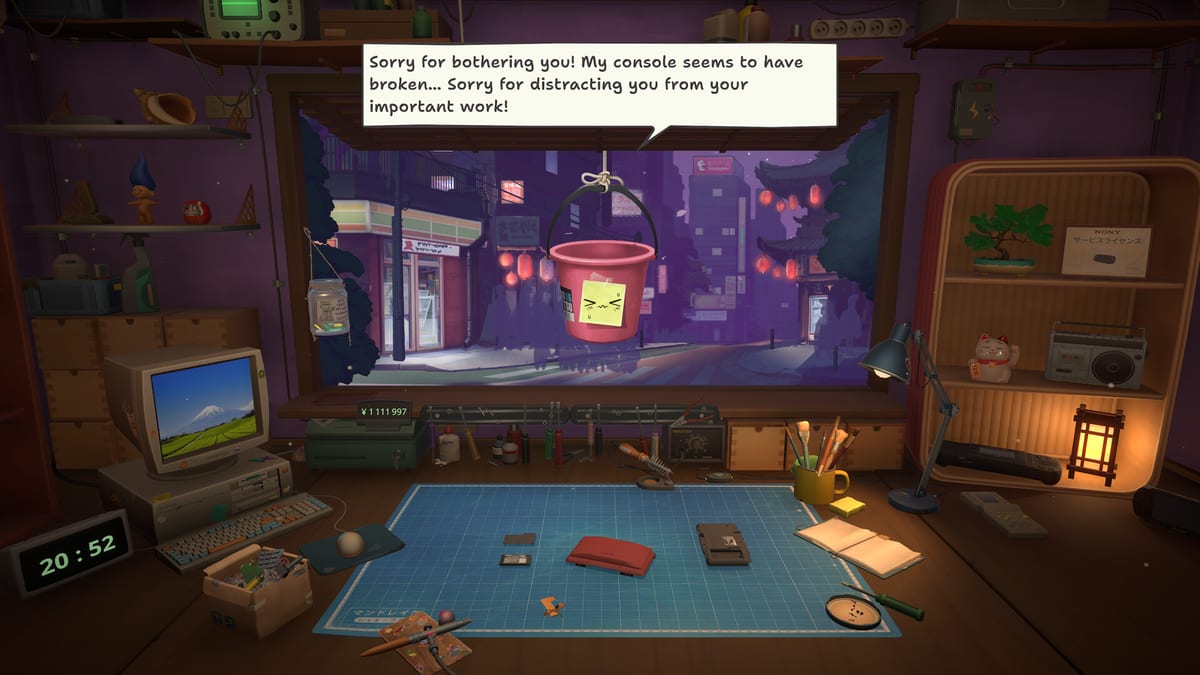
ReStory: Chill Electronics Repairs arrived on Steam August 6, 2026 from Mandragora and tinyBuild with more than seven hundred thousand wishlists and the quiet pressure that follows. Having played through the narrative campaign, tested post-launch patch systems, and compared notes with demo-era footage, this review evaluates whether the game delivers on cozy repair fantasy, branching ethics, and fair shop pacing—without treating wiki guides as substitutes for experiencing the work yourself.
Watch the embedded review video for audiovisual impressions; read on for systems-focused critique tied to this site’s Guides, Story hubs, and Controls reference.
What ReStory gets right
Tactile repairs feel earned. Disassembly mirrors real order-of-operations thinking: wrong clip angle strips plastic, missing screws block reassembly, cleaning passes matter before soldering. After the day-one solder fix, precision work aligns with the meditative promise in trailers. Pair difficulty with the repair slider if you want Coffee Talk pacing over simulation rigor.
The mid-2000s Tokyo aesthetic is coherent. Neon gradients, CRT browsers, flip-phone culture, and licensed Atari hardware sit together as one shop fantasy—not a asset pack. Walking the street between jobs sells the I Am Future team’s eye for lived-in spaces.
Customers carry weight. Kenji’s lost band recordings, Yuri’s virtual pet, Hana’s privacy, Kazuo’s gray-market tension, Grandma Chiyo’s camera—each device anchors ethics better than lore codexes. Characters profiles map arcs this review will not spoil beat-by-beat.
Branching is replayable without visual-novel bloat. Endings cluster by shop identity per Endings overview; second runs reward opposite ethics without rereading ten hours of identical bench tutorials if you manual save smartly.
Where friction remains
Economy still teaches through pressure. Launch patch softened early rent and shipping, yet Hashimoto remains a clock. Some players will ignore Shop management advice and feel punished—intentional for drama, debatable for “pure cozy.”
Bench freedom has scripted moments. Preview builds noted rigid reassembly order despite visual openness; release improves hints but not full sandbox physics. Simulation purists may want more failure tolerance; narrative players may prefer it.
Technical edge cases at launch. Community threads describe joysticks vanishing until reload—patched behaviors help solder, not every shelf glitch. Keep saves backed up before bulk upgrade days.
Not every language localizes cultural nuance equally. Patch notes cite localization passes; wiki readers on FR/DE/ES should spot-check emotional lines in their locale.
Narrative and ethics grade
ReStory’s boldest choice is making privacy gameplay. Inspecting Kazuo’s media player or Hana’s messages asks you to role-play a shopkeeper’s conscience, not just click “repair complete.” The game avoids preachy scoring; instead, endings describe neighborhood trust. That design aligns with Story choices frameworks and rewards dialogue history from the patch.
Weaker moments arrive when side customers feel like one-off gags compared to the core seven—expected in a focused sim, but noticeable if you crave uniform depth.
Systems and progression grade
Tool and license gates can obscure next steps; this wiki exists partly because the in-game tech tree scatters across email and dialogue. Once understood via Tool unlocks and Upgrade priority, progression feels fair post-patch—demo-era “rent panic” is largely tuned down.
Inventory filters and sorting finally make salvage viable for mid-game players following How to Get Spare Parts.
Presentation and audio
Character voice work stays clear after audio rebalancing listed in patch notes. Ambient street audio no longer drowns intake lines—a common demo complaint fixed at launch. Visuals are not AAA, but close-up bench lighting sells grime and cotton swab satisfaction.
Who should buy
| Player type | Verdict |
|---|---|
| Cozy sim fans | Strong buy if you tolerate light economy stress |
| Narrative sim fans | Strong buy for ethics-driven customers |
| Hardcore repair sims | Try demo / refund window; slider helps but order constraints remain |
| Achievement hunters | 50 Steam achievements—see Achievements for habit tips |
Wiki resources after purchase
Start How to Play, then First Days walkthrough. Layer Parts checklist during bench sessions. Before Kazuo or Hana peaks, read Choices. Track patches on Updates.
Final score context
ReStory is not the deepest management sim on Steam, nor the most technically accurate repair sandbox. It is one of 2026’s most sincere merges of gadget nostalgia and neighbor stories, improved measurably by a launch-day patch that listened to Next Fest feedback. If you want mid-2000s Tokyo with moral weight—and you are willing to read a customer before grabbing a screwdriver—this belongs in the cozy library beside your best Y2K playlists.
Confirm price and regional availability on the official Steam store page; this unofficial wiki is not affiliated with Mandragora or tinyBuild.
Frequently Asked Questions
Quick answers for ReStory players.
Is ReStory worth buying after the launch patch?
If you want cozy repairs plus branching ethics, yes—the day-one update addresses demo pain points like solder bugs, economy pressure, and missing dialogue history.
How long is a typical playthrough?
Expect a full first run to span multiple evenings depending on repair precision settings and how much browser email content you explore.
Does the review reflect the Steam achievement count?
Yes—50 achievements on Steam align with completion habits listed on this wiki's Achievements page without spoiling hidden names.
Where should buyers go after reading this review?
Start with How to Play and Controls, then follow walkthrough and story hubs based on whether you prefer mechanics or narrative first.